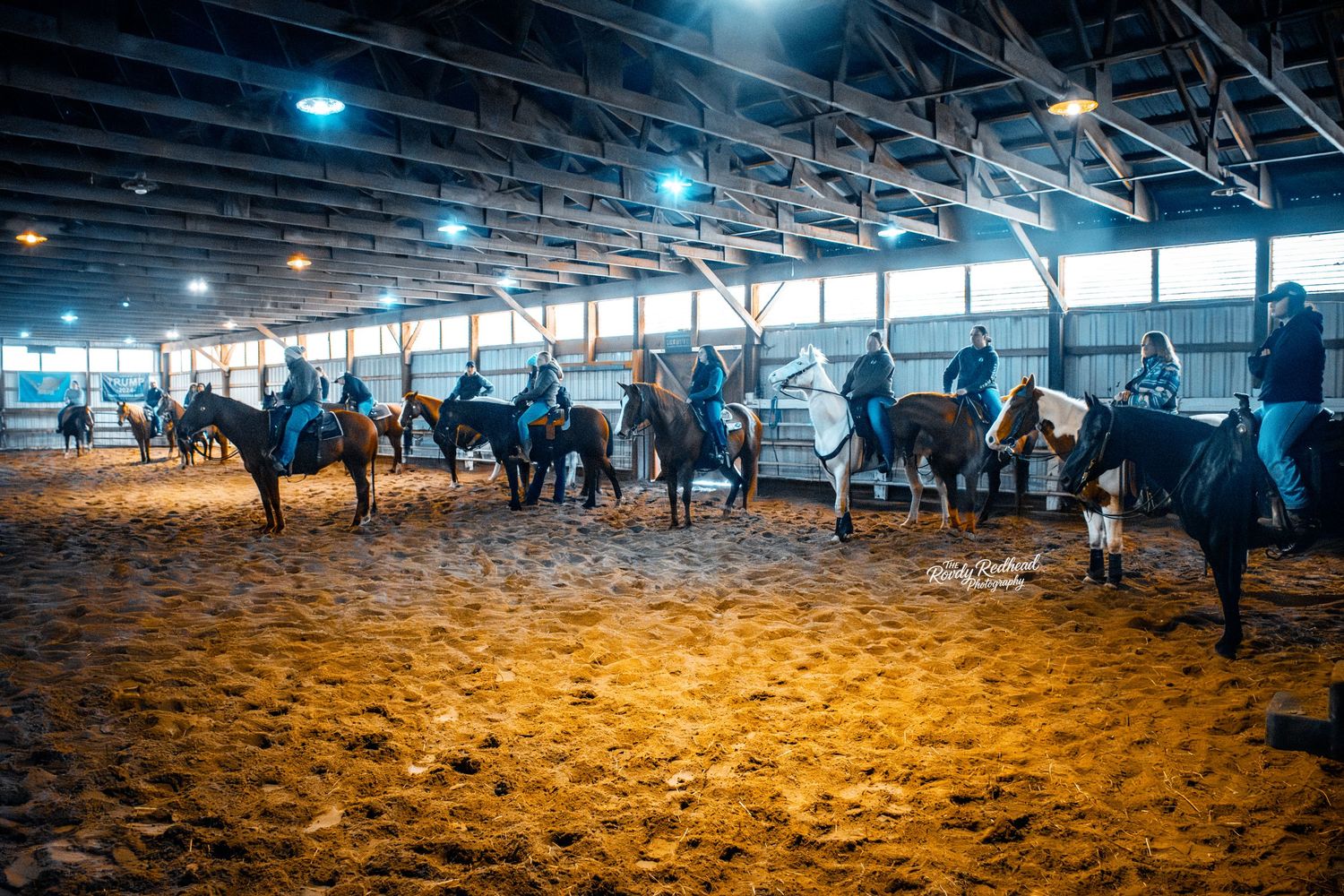
There’s something special about walking into an arena before anything really begins. The air feels full of possibility—horses shifting, riders tightening cinches, the quiet hum of anticipation building. That’s exactly how my Sunday started at the Budget Green Cutting Horse Clinic, hosted by Delang Cutting Horses in Fort Gratiot, Michigan.
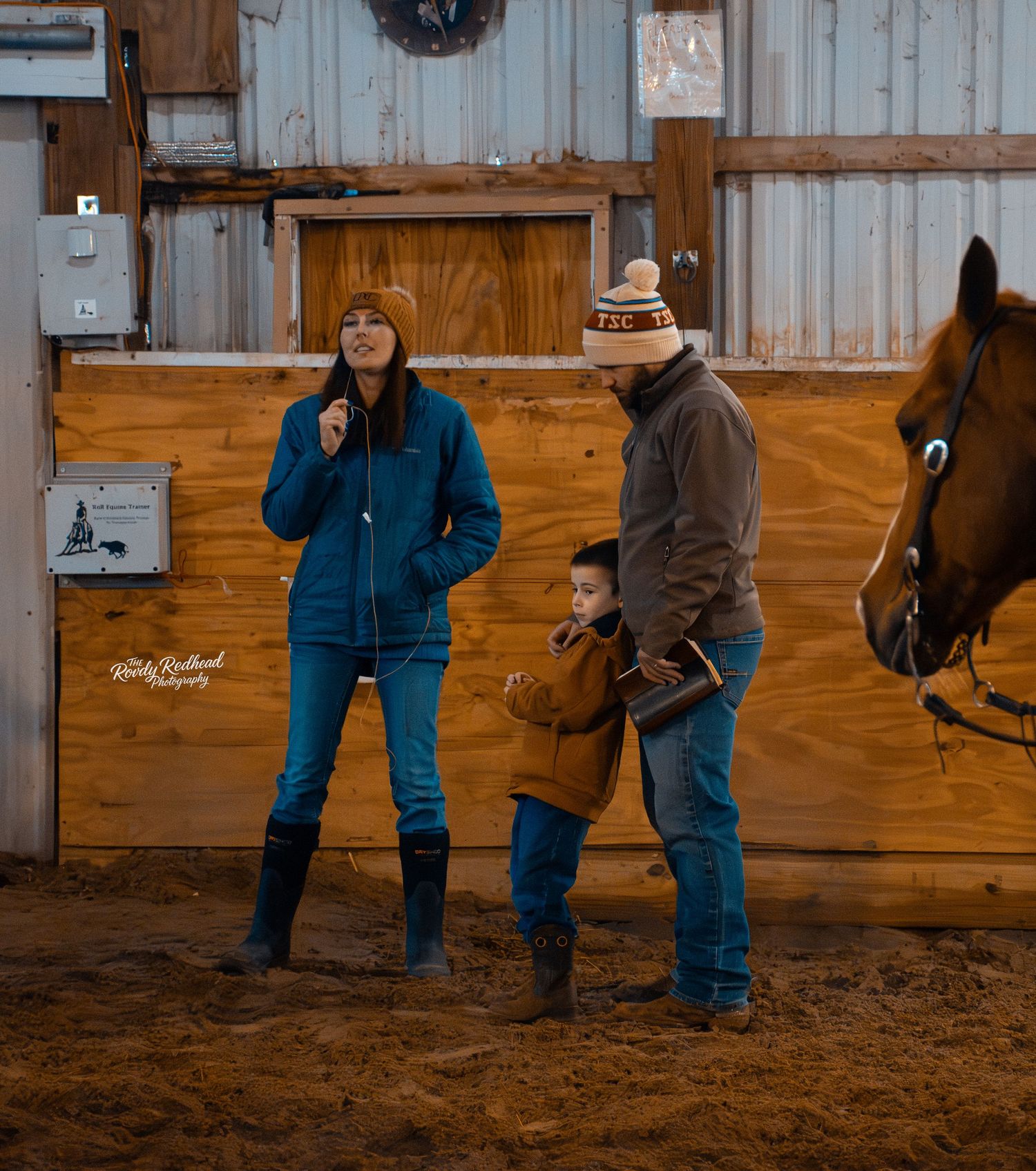
At 10 a.m., instead of jumping straight into riding, the day opened with something a little different—Cowboy Church. Courtney started us off by singing "What A Beautiful Name It Is" that echoed softly through the indoor arena, followed by a prayer led by Tyler. It set the tone for the day in a way that felt grounding and genuine. Before anyone picked up speed or sorted cattle, we all paused together.
Then it was time to get to work.
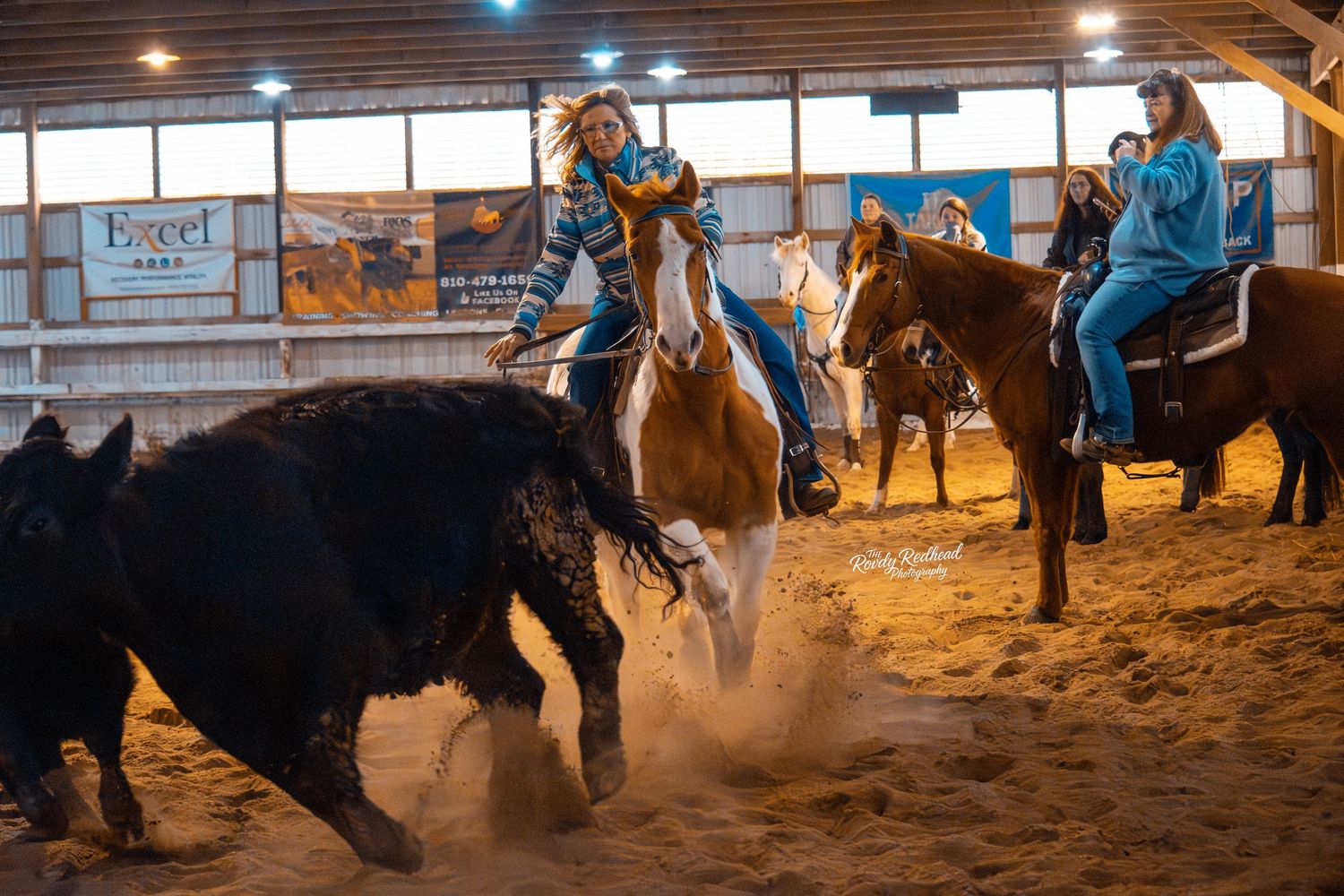
Tyler mounted up and joined the 17 riders who had signed up for the clinic. As for me? I didn’t have the luxury of sitting behind a fence or leaning on a rail. There was no barrier, no safe little photographer’s corner. I was right there in the arena—standing among the horses, moving with them, stepping in to help when needed, camera always ready.
And honestly, I wouldn’t have had it any other way.
Learning the Language of Cutting
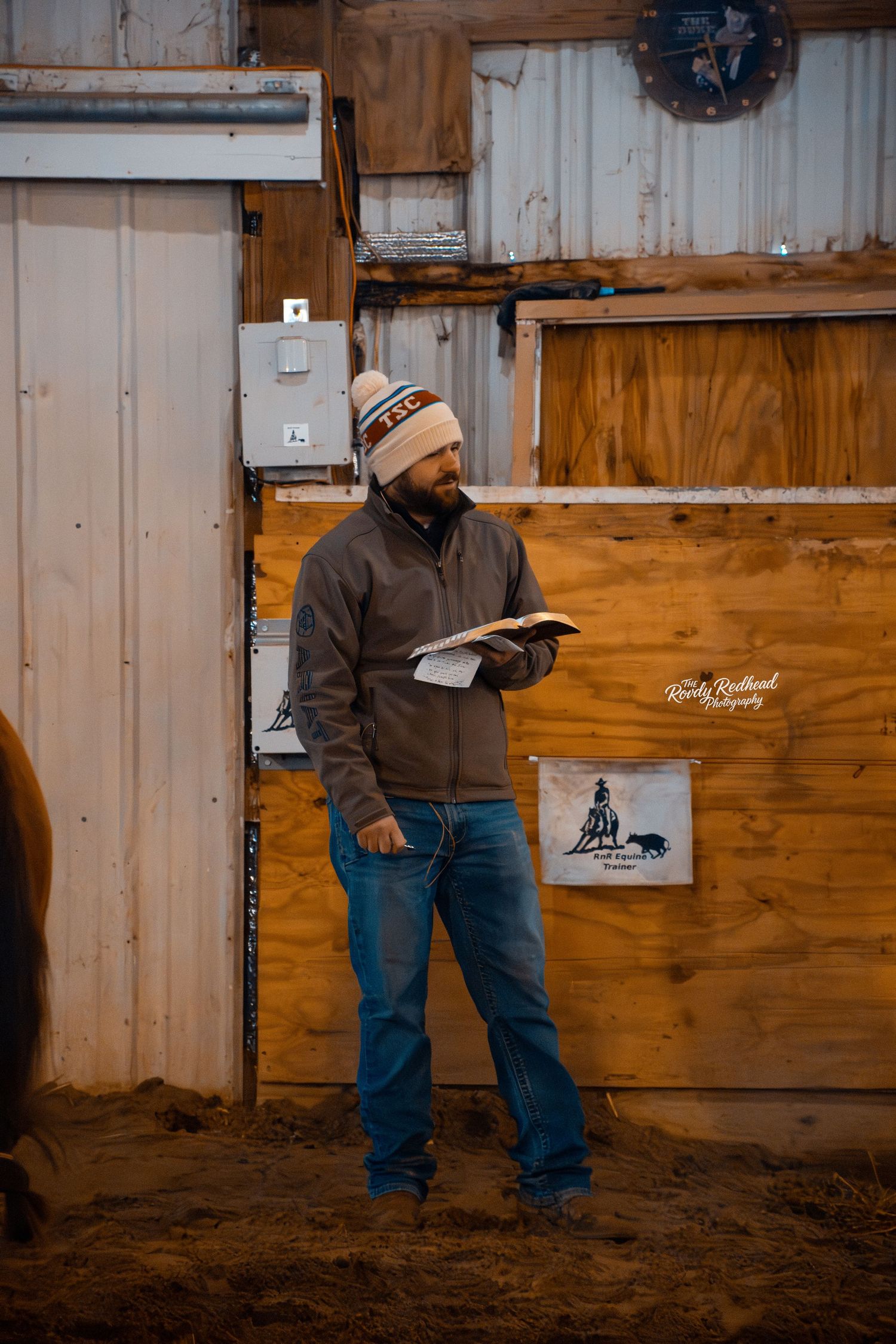
Tyler started by breaking down the rules of cutting competitions—how the runs are judged, what riders are aiming for, and what separates a good ride from a great one. Even from behind the lens, I found myself pulled in. There’s a rhythm and strategy to cutting that you don’t fully appreciate until you see it up close.
Then came the flag work.
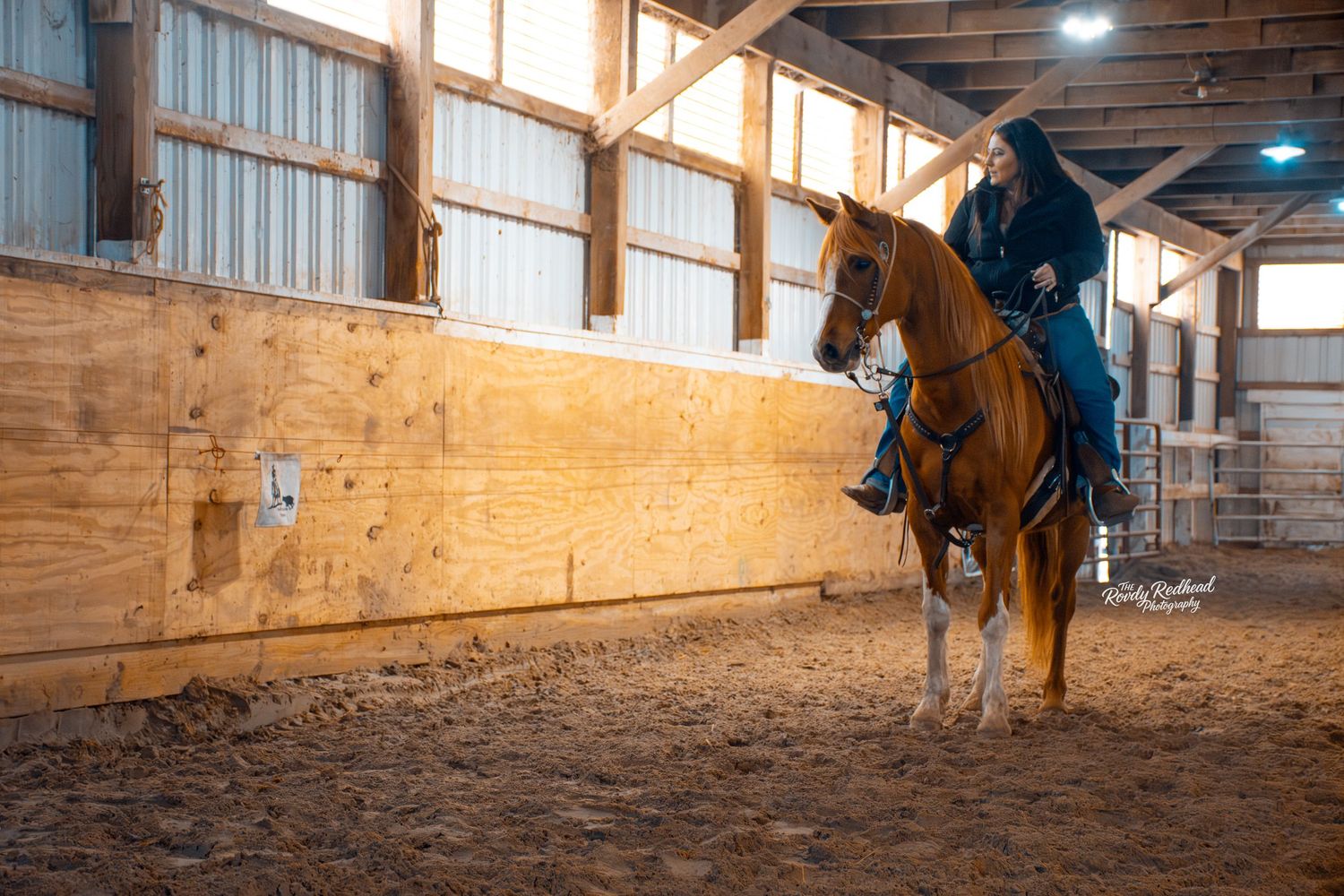
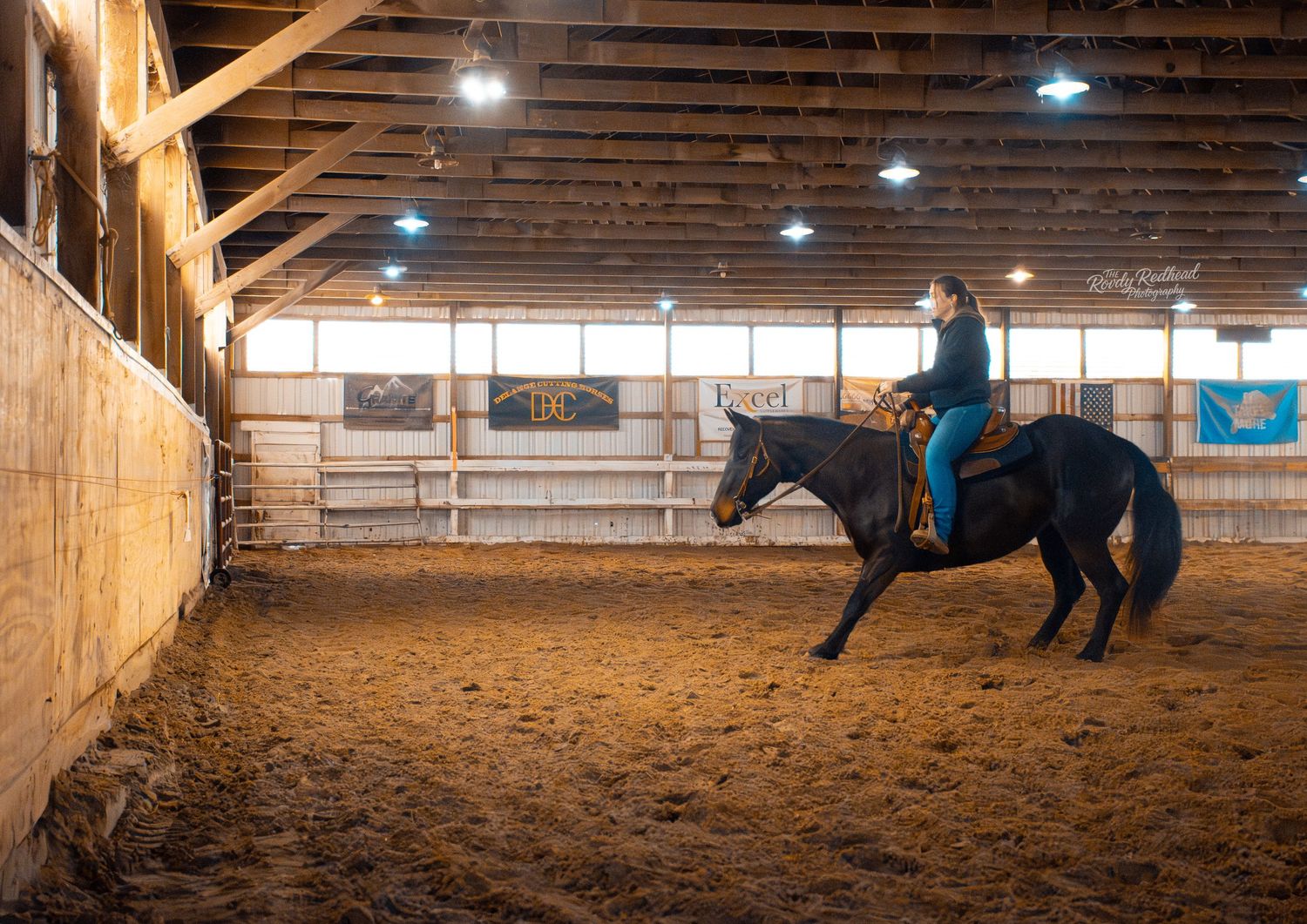
For those new to it, the flag is a simple concept—a small flag attached to a rope system that runs back and forth along the arena wall. But what it represents is much bigger. It gives both horse and rider a controlled introduction to the movements they’ll need when working a real cow. The flag mimics the unpredictable motion of cattle, teaching the horse to lock on, stay focused, and mirror movement with precision.
It’s where instinct starts to build.
You could see it happening in real time—horses learning to track, to stop and turn, to stay engaged. Riders were learning timing, positioning, and how to trust their horse. It was practice, yes—but it was also the foundation of everything that came next.
When the Temperature Dropped… Fast
After flag work, we broke for lunch. And that’s when everything changed.
The forecast had called for around 50 degrees, but Michigan had other plans. The temperature dropped quickly into the low 20s, and I was not dressed for it. At first, it was just a chill. Then it settled into my hands, my feet… and eventually, my bones. But there wasn’t a chance I was stepping away.
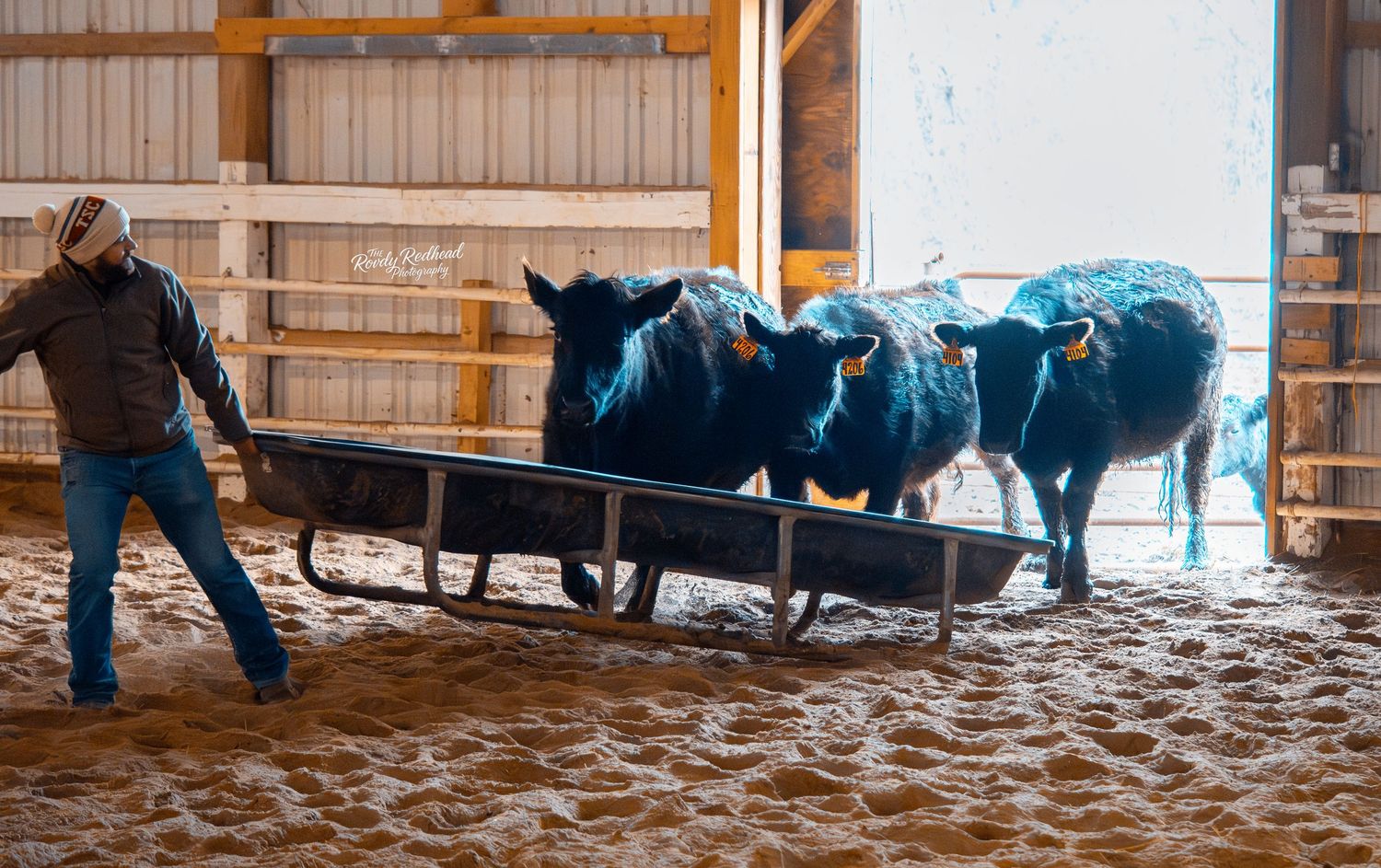
After lunch, Tyler brought in the herd—and with them, the real magic of the day.
One cow in particular stood out. She didn’t have a tag and was more or less considered the “pet” of the group. Instead of sticking with the herd, she kept wandering over to those of us on foot. We’d gently push her away, trying to keep things moving, but she had other plans.
All she wanted was attention.
And honestly? I didn’t blame her. She was incredibly soft, the kind of soft that makes you want to drop everything and just hug her. It was a lighthearted moment in the middle of a focused, hardworking afternoon.
The Work Behind the Sport
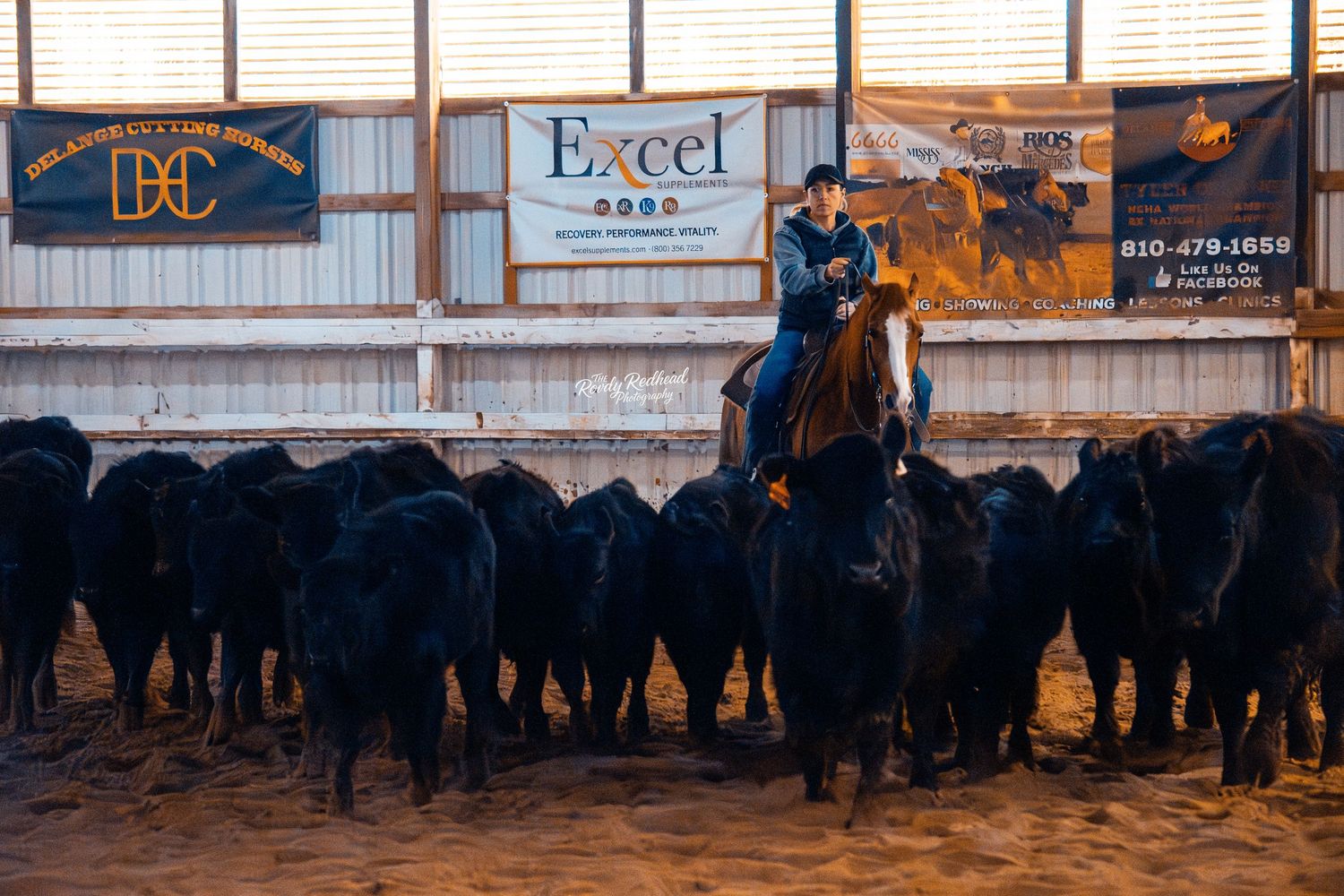
One by one, each rider took their turn cutting a cow from the herd. The goal was simple in theory—separate a single cow and keep it from returning—but the execution required timing, feel, and connection.
Riders worked on:
- Approaching the herd with intention
- Selecting and separating a cow cleanly
- Positioning their horse to control movement
- Matching the cow step-for-step, reacting instantly
Each participant got three turns, and with every run, you could see improvement. Horses became sharper. Riders grew more confident. The pieces started coming together.
Enter a Heading
About halfway through, the cold really set in. I was shivering constantly, trying to keep my fingers moving enough to operate my camera. It would’ve been easy to call it quits—to step out, warm up, miss a few runs.
But I didn’t.
Because this is the part no one sees behind the photos—the commitment to being present, no matter what.
And I’m so glad I stayed.
I captured moments I would’ve otherwise missed—the intensity in a rider’s eyes, the split-second reactions between horse and cow, the quiet victories after a good run. Those are the shots that matter. The ones that tell the story.
By the end of the day, I wasn’t just walking away with a full memory card—I was walking away inspired.
This clinic lived up to its name in every way. It was affordable, yes—but more importantly, it was deeply educational and welcoming. Whether someone was brand new or just looking to refine their skills, there was space for them here.
And even as someone who never swung a leg over a saddle that day, I learned so much.
Enough to know one thing for sure:
Next time, I don’t just want to photograph it.
I want to be in it.